
Howo vs Isuzu: 60% of Nigerian Operators Choose Howo – Here’s Why
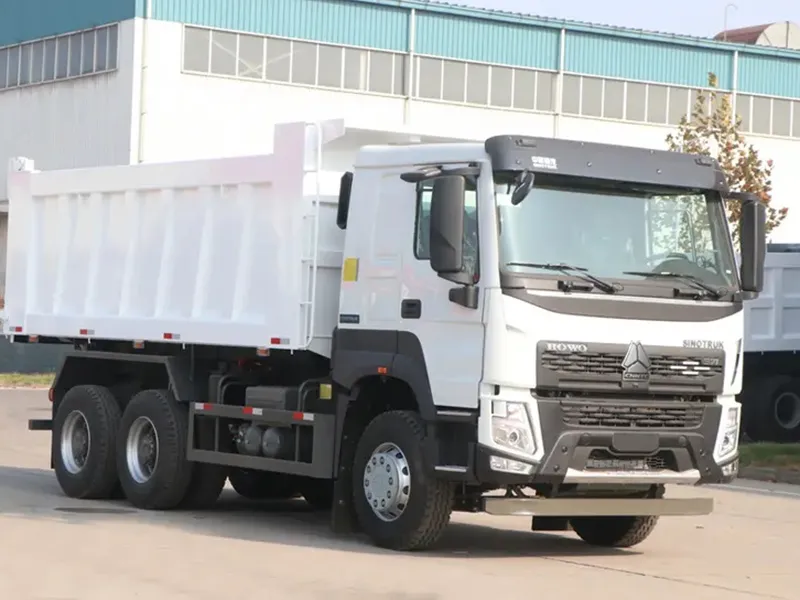
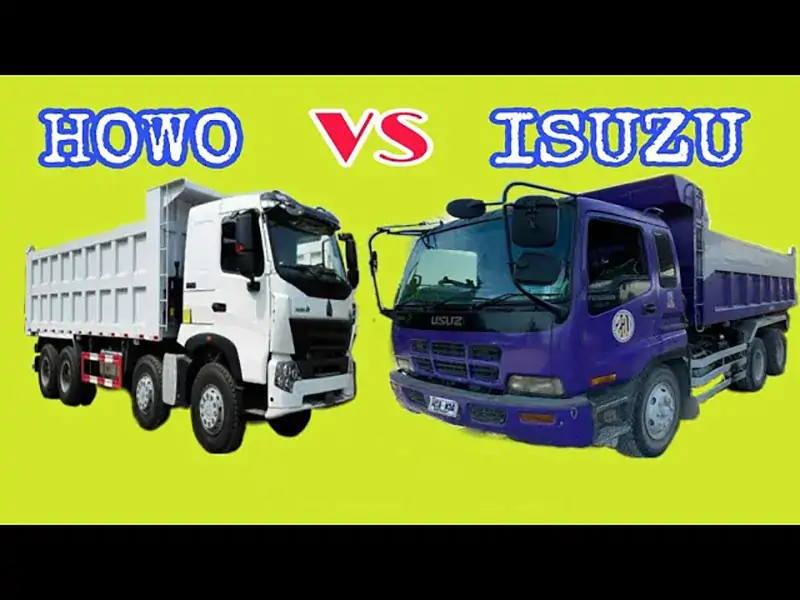
When comparing howo vs isuzu for heavy-duty operations in Nigeria, the decision often comes down to total cost of ownership and suitability for local conditions. While Isuzu has long been respected for its engineering precision, Howo trucks—manufactured by Sinotruk—have rapidly gained market share across Lagos, Kano, and Port Harcourt. The reason? Howo offers superior value for money, rugged construction tailored to African roads, and a parts supply network that keeps trucks moving. For genuine replacements that maintain factory performance, always rely on Howo Truck Parts from authorized suppliers.
This comprehensive guide examines the howo vs isuzu debate across performance, fuel efficiency, maintenance costs, and long-term value—with a focus on why Howo has become the preferred choice for Nigerian fleet operators.
Howo vs Isuzu: The Nigerian Market Reality
Nigeria’s road transport network carries over 80% of the country’s cargo, making truck reliability and operating costs critical for business success. In this demanding environment, the howo vs isuzu comparison reveals why Chinese brands now dominate the market. According to industry data, Chinese manufacturers hold approximately 60% of Nigeria’s heavy truck market share. Howo, as Sinotruk’s flagship brand, leads this segment with over 50,000 units operating across the country.
The howo vs isuzu decision is not about which truck is “better” in absolute terms—both are competent vehicles. Rather, it’s about which truck better suits Nigerian operating conditions, maintenance capabilities, and budget constraints. Howo has deliberately engineered its trucks for African environments, with reinforced chassis, enhanced cooling systems, and simplified electronics that local mechanics can service without specialized diagnostic tools.
Engineering Philosophy: Howo vs Isuzu Design Approaches
Howo: Robustness-First Design
Howo trucks embrace a “strength above refinement” philosophy. The chassis uses high-tensile steel with reinforced crossmembers, creating exceptional resistance to twisting forces under heavy loads common in Nigerian mining and construction. Suspension systems employ multi-leaf spring configurations with substantial damping capacity, optimized for challenging terrain and inconsistent road surfaces. Electrical systems follow straightforward schematics with minimal multiplexing, facilitating troubleshooting in field conditions.
Isuzu: Precision Engineering
Isuzu engineering reflects Japanese precision manufacturing, with emphasis on efficiency, reliability, and driver comfort. Their engines utilize sophisticated common-rail injection systems with precise electronic control, achieving remarkable combustion efficiency. The Isuzu chassis incorporates weight-saving technologies, while electrical architecture features comprehensive CAN bus integration with advanced diagnostic capabilities. However, this sophistication requires specialized training and equipment for complex repairs.
Howo vs Isuzu: Technical Specifications Comparison
Fuel Efficiency: Howo vs Isuzu Operating Economics
Howo Fuel Consumption
Howo trucks typically achieve 28–32 L/100km for 4×2 models, 35–40 L/100km for 6×4 tractors, and 45–50 L/100km for 8×4 dump trucks under Nigerian conditions. The WD615 engine’s mechanical simplicity means slightly higher consumption than Isuzu, but the trade-off is easier maintenance and lower repair costs when something breaks.
Isuzu Fuel Advantage
Isuzu’s advanced common-rail injection and optimized combustion deliver 8–12% better fuel economy in comparable applications. For high-mileage operations, this advantage can save millions of naira annually. However, this efficiency comes with more complex emission systems (EGR, SCR, DPF) that require high-quality fuel and specialized maintenance.
Cost Per Kilometer
When evaluating howo vs isuzu on operating costs, Nigerian operators report that Howo’s lower parts prices (20-30% below Japanese equivalents) partially offset its higher fuel consumption. A 5% improvement in fuel efficiency can save over ₦1.5 million annually on long-haul routes.
Purchase Price: Howo vs Isuzu Initial Investment
Howo Price Advantage
Under the same vehicle condition, Chinese trucks are priced 30–40% lower than Japanese trucks. For example, a 2015 Howo 6×4 dump truck costs about $18,000, while a Hino of the same year exceeds $25,000. New Howo tractor heads range from $45,000–$55,000, significantly undercutting comparable Isuzu models.
Resale Value Comparison
Isuzu traditionally retains stronger resale value—40–50% after 5 years compared to 25–35% for Howo. However, Howo’s growing market share and parts availability are narrowing this gap. Well-maintained Howo trucks with service records can achieve 50–60% retention after 5 years due to strong demand.
Total Cost of Ownership
While Howo’s acquisition cost is lower, the howo vs isuzu TCO calculation depends on utilization. For high-mileage operations (100,000+ km/year), Isuzu’s fuel efficiency may recover its premium over 3–4 years. For moderate use, Howo’s lower purchase price and cheaper parts often deliver better ROI.
Maintenance: Howo vs Isuzu Service Requirements
- Service intervals: Howo recommends oil changes every 5,000–7,000 km in dusty Nigerian conditions, while Isuzu intervals extend to 25,000 km with synthetic oil.
- Parts availability: Howo parts are widely stocked in Lagos, Kano, and Onitsha auto markets. Common components like brake pads and filters are easily found. Isuzu genuine parts require authorized dealers and longer lead times.
- Repair complexity: Howo’s simpler systems allow local mechanics to perform repairs without specialized diagnostic tools. Isuzu’s CAN bus systems require trained technicians and proprietary equipment.
- Local assembly: Sinotruk has established assembly operations in Lagos, with 45% local content, reducing import duties and delivery times. Isuzu’s local presence is primarily through distributors.
Durability: Howo vs Isuzu in Harsh Environments
Howo’s African Adaptation
Howo trucks are specifically engineered for African conditions. The HOWO NX series combines Italian cab design with German chassis technology, adapted through 20+ years of Sinotruk’s African market experience. Features include reinforced frames, enhanced cooling for tropical climates, and dust-resistant electrical connections. Nigerian operators report that a 10-year-old Howo can run another five years with proper maintenance.
Isuzu’s Reliability Reputation
Isuzu powertrains regularly exceed one million kilometers before major overhaul in highway service. However, the sophisticated emission control systems (EGR, DPF) can be problematic with Nigerian fuel quality. Electronic system reliability is exceptional, but module failures are costly to repair.
Safety Features: Howo vs Isuzu Comparison
Modern Howo models incorporate significant safety improvements. The Howo 7 features dual-circuit air brakes with optional ABS and ZF hydraulic power steering for precise control under load. Newer Howo A7 and T7S models include advanced cab designs with better visibility and sound insulation. Isuzu traditionally leads in advanced safety systems, including comprehensive electronic stability control and emergency braking on newer models. However, Howo’s simpler systems are easier to maintain and less prone to electronic failures in harsh conditions.
Future-Proofing: Howo vs Isuzu Emissions Compliance
Nigeria plans to fully implement Euro 4 emission standards by 2026. This regulatory shift will impact the howo vs isuzu decision significantly:
- Howo’s readiness: The HOWO NX series achieved Euro 4 certification in 2023 using SCR + DPF technology, with NOx emissions reduced 50% and particulate matter 80% below Euro 3 levels.
- Isuzu compliance: Isuzu already meets Euro 4/5 standards but requires ultra-low sulfur diesel (50ppm) for proper DPF function—still scarce in many Nigerian regions.
- Local assembly advantage: Howo’s Lagos assembly plant already achieves 45% local content, reducing import tariffs and ensuring compliance with local content regulations.
Best Applications: Howo vs Isuzu Operational Profiles
Mining & Quarry
Howo dominates this sector due to reinforced frames and simpler hydraulic.
Construction
Both brands compete, but Howo’s 8×4 dump trucks are preferred for heavy loads.
Long-Haul Logistics
Isuzu’s fuel efficiency gives it an edge, but Howo’s lower TCO attracts price-sensitive fleets.
Oil & Gas
Specialized Howo tankers with anti-static systems meet local requirements.
Why Howo Wins in Nigeria: The Deciding Factors
The howo vs isuzu debate in Nigeria increasingly favors Howo for several compelling reasons. First, the parts supply chain is unmatched—Lagos, Kano, and Onitsha have thriving Howo parts markets where common components are readily available. Second, the local mechanic base is familiar with Howo’s mechanical systems, with job postings specifically seeking “Howo mechanics” indicating the brand’s penetration. Third, Sinotruk’s investment in local assembly through partnerships like Dangote Sinotruk ensures supply continuity and government support.
The HOWO 7 series, particularly the 6×4 dump truck, has become the top-selling model in Nigeria and surrounding countries. With 380 HP, 1600 Nm torque, and reinforced double-layer frames, these trucks handle 25-tonne payloads reliably in quarry and mine operations. The HOWO NX, a newer model specifically developed for Africa, combines modern comfort with proven durability.
Nigerian operators also benefit from Sinotruk’s comprehensive support network. Service centers in major cities, maintenance packages, and driver training programs reduce downtime. As one dealer noted, “In Nigeria, a 10-year-old Sinotruk HOWO truck can run for another five years if some parts are replaced as long as the engine has no major problems”.
The future looks bright for Howo in Nigeria. With Euro 4 models already available and hybrid versions (200 kWh battery + 371 HP engine) offering 28 L/100km fuel consumption—15% better than conventional models—Howo is positioning for the next decade. Local assembly content is projected to reach 60% by 2026, potentially reducing prices another 8–10% .
Quick Reference: Howo vs Isuzu Decision Guide
- Howo price: 30-40% lower initial cost
- Isuzu fuel economy: 8-12% better
- Parts cost: Howo 20-30% cheaper
- Resale value (5yr): Howo 25-35% vs Isuzu 40-50%
- Service intervals: Howo 5-7k km vs Isuzu 25k km
- Local assembly: Howo 45% Nigerian content
- Euro 4 readiness: Both available
- Market share: Howo ~60% of heavy trucks
Choose Howo for ruggedness and lower upfront cost; choose Isuzu for maximum fuel efficiency if your budget allows premium investment and specialized maintenance.
The howo vs isuzu comparison ultimately reveals two excellent trucks optimized for different priorities. Howo’s dominance in Nigeria stems from its deliberate adaptation to local conditions, unmatched parts availability, and value pricing that puts heavy-duty capability within reach of more businesses. For operators seeking the best return on investment in mining, construction, and regional haulage, Howo consistently delivers. Protect your investment with genuine Howo Truck Parts and benefit from Sinotruk’s growing local support network across Nigeria.